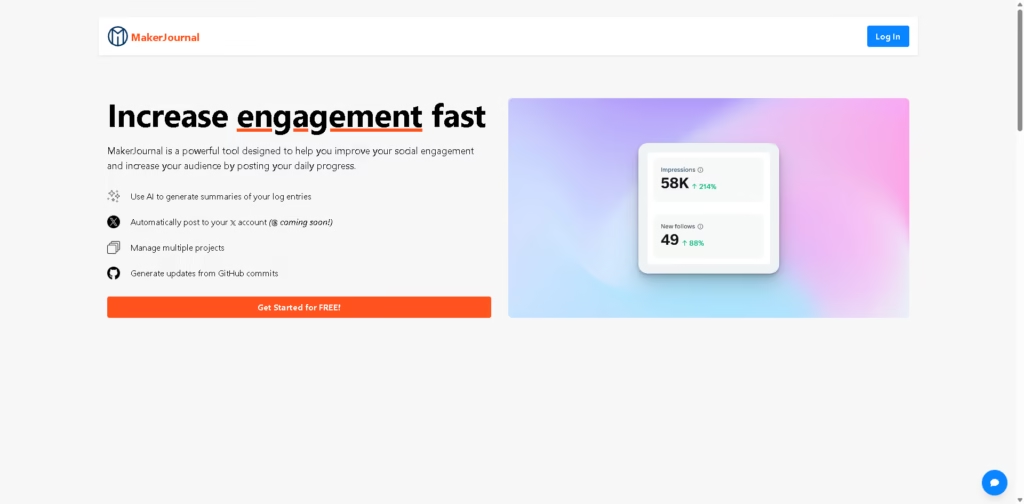
What It Does
MakerJournal is a social engagement tool for makers and developers who want to turn their daily project progress into social media posts. It combines project journaling with AI-generated summaries, automatic X posting, multi-project management, and GitHub commit-based updates.
A typical workflow is to log project progress or use existing GitHub commits, let MakerJournal generate a concise summary, and then automatically publish the update to an X account. This reduces the need to create social posts separately from work already being documented.
Quick Verdict
- Best for: Turning development progress into consistent social updates
- Skip if: You need broad social-platform publishing beyond the stated X support
- Key Advantage: Converts existing project work into social content
- Top Alternative: Buffer
At a Glance
| Feature | Details |
|---|---|
| Category | Social Media Management |
| Pricing Model | Not specified |
| Free Tier | Yes |
| Platform | Web |
| API | Not specified |
| Primary Strength | Automated progress-to-post workflow |
| AI Capability | AI-generated journal summaries |
| Key Integration | GitHub |
Key Features
- Generates concise summaries from daily and weekly journal entries.
- Automatically posts generated updates to an X account.
- Creates social updates from GitHub commit activity.
- Supports management of multiple projects.
- Lets users record project progress as work happens.
Best For
- Turning GitHub commits into social media updates.
- Maintaining consistent daily project progress posts.
- Summarizing weekly development activity for social audiences.
- Managing social content across multiple active projects.
- Sharing maker-building progress without writing posts manually.
Pros & Cons
Pros:
- Repurposes existing development activity into social content.
- AI summaries reduce manual writing for progress updates.
- GitHub integration connects directly with developer workflows.
- Multiple-project management supports users building several products.
Cons:
- X is the stated automatic publishing platform; Threads is listed as coming soon.
- Pricing details are not specified in the provided information.
- API availability is not specified.
Alternatives & Comparisons
| Alternative | Best For | Key Difference vs. This Tool |
|---|---|---|
| Buffer | Scheduling content across social networks | Broader social scheduling and publishing focus |
| Hootsuite | Managing multiple social accounts | More comprehensive social management capabilities |
| Typefully | Writing and scheduling X content | More focused on composing and scheduling social posts |
MakerJournal occupies a specialized position between project journaling and social media management by turning development activity into publishable updates. Choose it over broader social tools when your primary goal is to automatically transform maker or GitHub progress into consistent social content.
Frequently Asked Questions
Does MakerJournal automatically post to social media?
Yes. The provided information states that MakerJournal can automatically post updates to an X account.
Can MakerJournal generate posts from GitHub?
Yes. MakerJournal can generate updates from GitHub commits.
Can I use MakerJournal for multiple projects?
Yes. The tool includes support for managing multiple projects.
Does MakerJournal support Threads?
Threads support is described as coming soon, so it should not be treated as an available integration based on the provided information.
Is MakerJournal free?
The website offers a “Get Started for FREE!” option, but specific free-tier limits or paid-plan pricing are not provided.
ToolsPedia Rating
- Performance & Speed: 4.0/5.0
- Ease of Setup: 4.3/5.0
- Feature Depth: 3.5/5.0
- Value for Price: 4.0/5.0
- ToolsPedia Score: 4.0/5.0
Final Thoughts
MakerJournal is a focused solution for developers, makers, and indie builders who want their ongoing work to become regular social content. Its strongest use case is connecting project journals and GitHub commits with AI-generated summaries and automatic X publishing.
Users whose workflow centers on sharing development progress should start with the available free option and assess whether its publishing scope meets their needs.