What It Does
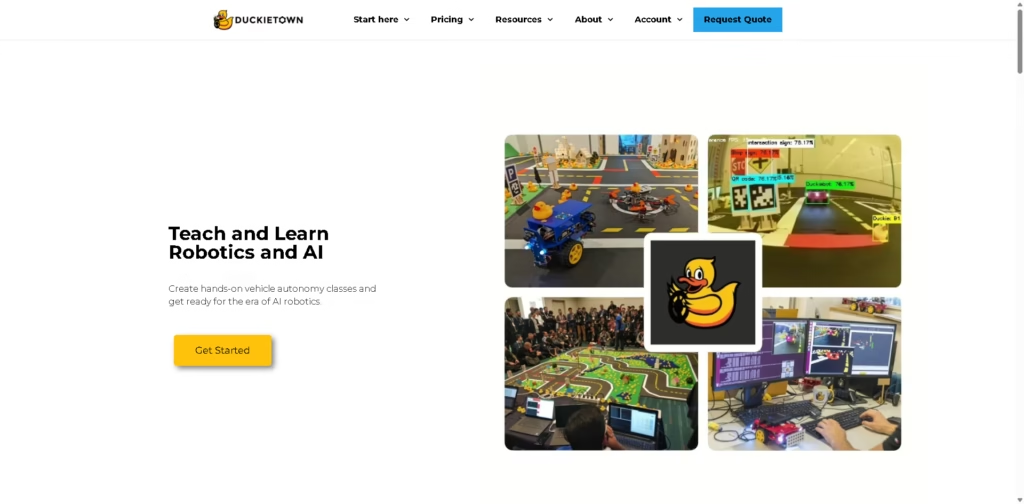
Duckietown is a hands-on robotics and AI learning platform designed to teach autonomous systems in a practical, engaging way.
It helps students, educators, and researchers learn how self-driving robots work using real robots, simulations, and structured learning materials.
In simple terms, it’s an educational ecosystem where people learn robotics and AI by actually building and experimenting with self-driving robot systems.
Key Features
- Hands-on Robotics Learning – Teaches AI and robotics through real experiments, not just theory.
- Duckiebot Robots – Small self-driving robots used for practical learning exercises.
- Simulation + Real Hardware – Combines virtual simulations with physical robot testing.
- Autonomous Driving Education – Focuses on self-driving car concepts in a simplified environment.
- Structured Courses & Lectures – Offers guided learning materials used by universities worldwide.
- ROS, Python & Docker Support – Uses industry-standard tools for robotics development.
- Global Academic Use – Adopted by universities and research labs around the world.
- Research Platform – Supports experiments in AI, robotics, and autonomous systems.
Who Is Duckietown For?
- Students – Especially those learning robotics, AI, or computer science.
- Educators & Professors – Useful for teaching practical robotics courses.
- Researchers – Ideal for testing autonomous driving and AI algorithms.
- Robotics Beginners – Great entry point into real-world robotics.
- Tech Enthusiasts – Anyone interested in building or learning self-driving systems.
Final Thoughts
Duckietown stands out as one of the most practical and educational robotics platforms available. Instead of only teaching theory, it gives learners real robots and tools to experiment with autonomy and AI systems.
Its strong academic backing and hands-on approach make it especially valuable for anyone serious about learning robotics or autonomous driving technology.