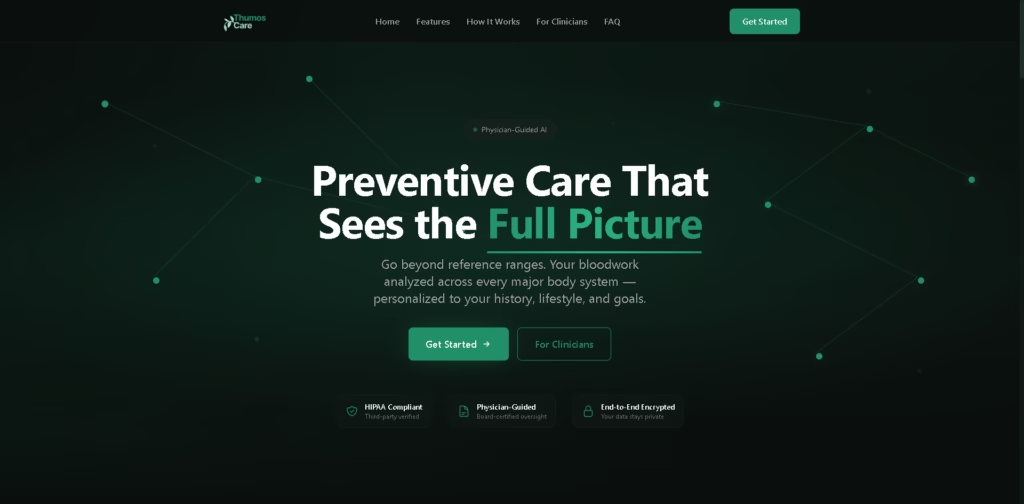
What It Does
ThumosCare is a preventive-health platform that analyzes laboratory results in the context of a person’s medical history, lifestyle, medications, symptoms, and goals. It organizes biomarkers across body systems and uses a medical knowledge graph to produce personalized health insights and recommendations.
The platform also has a clinician-focused side for evidence search and patient management. For example, a user can upload bloodwork and health records, complete a detailed profile, review system-level trends, and then invite a physician to add clinical notes that become part of the ongoing analysis.
At a Glance
| Field | Details |
|---|---|
| Category | Preventive health and clinical decision-support platform |
| Primary Users | Patients and healthcare providers |
| Input Data | Blood tests, DEXA scans, health records, lifestyle and medical history |
| File Formats | PDF, Excel, manual entry |
| Knowledge Base | Medical knowledge graph with 130K+ biomedical relationships |
| Evidence Sources | PubMed, Cochrane, and major clinical guidelines |
| Security | HIPAA compliant, end-to-end encrypted |
| Starting Price | Free to start, no credit card required |
Key Features
- Maps biomarkers across cardiovascular, metabolic, hormonal, immune, and other body systems.
- Tracks biomarker trends alongside lifestyle, medication, supplement, and symptom changes.
- Uses medical history and personal goals to contextualize laboratory analysis.
- Provides text and voice conversations with a profile-aware health advisor.
- Supports physician collaboration through shared patient health profiles and clinical notes.
- Searches PubMed, Cochrane, and clinical guidelines with cited AI-generated answers.
- Generates prioritized recommendations covering lifestyle, diet, supplements, and follow-up testing.
Best For
- Understanding laboratory results in the context of broader health information.
- Tracking biomarker changes alongside lifestyle or medication changes.
- Preparing personalized health information for discussions with physicians.
- Searching medical evidence using patient-specific clinical context.
- Managing multiple patient profiles and evidence searches from one clinician dashboard.
Pros & Cons
| Pros | Cons |
|---|---|
| Combines patient data, biomarker trends, and clinical context. | It should not replace professional medical diagnosis or treatment decisions. |
| Provides cited searches across major medical evidence sources. | The accuracy and clinical usefulness of AI-generated recommendations require independent evaluation. |
| Supports both patient and clinician workflows. | Pricing beyond the free starting option is not provided in the supplied information. |
| Offers physician collaboration and patient-specific clinical notes. | The platform depends heavily on the completeness and accuracy of uploaded health information. |
| Includes voice and text interaction with profile context. | Some advanced clinician capabilities may require provider onboarding or setup. |
Alternatives & Comparisons
| Alternative | Best For | Key Difference |
|---|---|---|
| Function Health | Comprehensive personal health tracking | Strong emphasis on extensive laboratory testing and longitudinal health insights |
| InsideTracker | Biomarker optimization | Focuses heavily on biomarker-based wellness and performance optimization |
| Heads Up Health | Personal health data aggregation | Broader integration and tracking of health metrics from multiple sources |
| Doximity | Clinical reference and physician workflows | Broader professional healthcare platform rather than patient biomarker analysis |
ThumosCare sits between personalized health analytics and clinician-oriented evidence support, combining both sides in one platform. Choose it when you want laboratory interpretation connected to personal context and physician collaboration rather than standalone biomarker tracking.
Frequently Asked Questions
What types of health information can ThumosCare analyze?
The platform accepts blood tests, DEXA scans, and health records, while its intake captures medical history, family history, medications, supplements, symptoms, lifestyle, and goals.
Does ThumosCare provide medical advice?
The supplied website states that its content is for informational purposes and should not be considered medical advice. Users should consult healthcare professionals for medical concerns.
Can doctors use ThumosCare with their patients?
Yes. Clinicians can maintain patient profiles, add clinical observations, search medical evidence, and incorporate their notes into patient-specific analysis.
What medical evidence sources does ThumosCare search?
Its clinical search covers PubMed, Cochrane, and guidelines from organizations including USPSTF, AHA/ACC, ADA, CDC, NICE, and ESC.
Does ThumosCare cite its medical research?
Yes. The vendor describes AI-synthesized answers with inline citations and references containing information such as abstracts, DOIs, citation counts, and recommendation grades.
Overall Rating
| Category | Score |
|---|---|
| Performance | 8.4/10 |
| Ease of Use | 8.5/10 |
| Feature Set | 9.1/10 |
| Workflow Fit | 8.8/10 |
| Overall | 8.7/10 |
ThumosCare offers an unusually broad combination of personal biomarker analysis, longitudinal tracking, physician collaboration, and evidence-based clinical search.
Final Verdict
- Best for: Patients and clinicians seeking contextualized laboratory analysis with evidence and physician collaboration.
- Avoid if: You need a replacement for professional diagnosis, treatment, or direct medical care.
- Biggest strength: Connects personal health data with biomarker trends, clinical notes, and cited medical evidence.
- Best alternative: Function Health for users primarily focused on comprehensive personal health and laboratory tracking.