What It Does
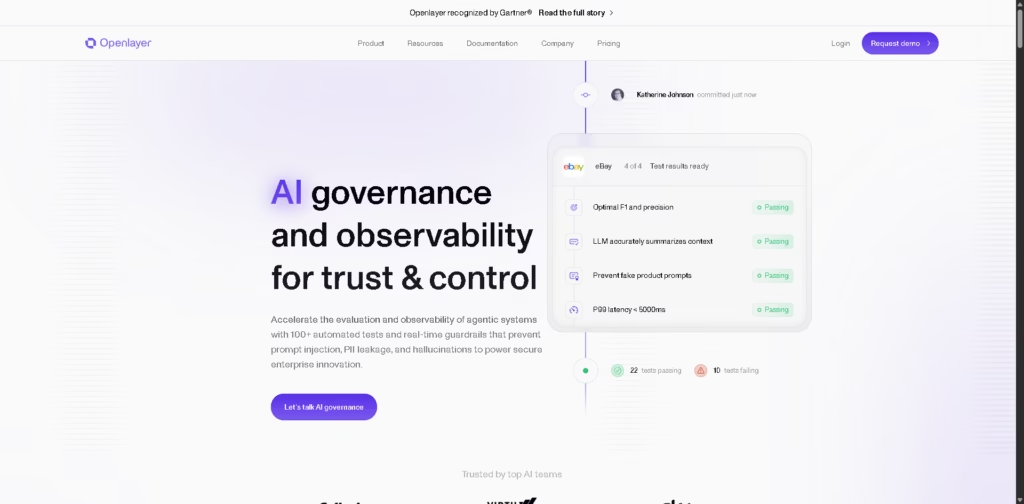
Openlayer is an AI observability, evaluation, and governance platform that helps teams test, monitor, and improve AI systems before and after deployment.
It’s designed to make sure AI models and agents behave correctly in real-world use by running tests, tracking performance, and catching issues like bias, errors, or slow responses in real time.
Key Features
- Real-time AI monitoring: Tracks live AI requests and flags issues like latency spikes, errors, or unexpected outputs.
- Automated evaluation tests: Runs checks like accuracy, safety, bias detection, and response quality across AI outputs.
- LLM & ML observability: Gives visibility into how AI systems behave in production, including logs, traces, and performance metrics.
- Custom test creation: Let teams design their own evaluation rules (e.g., detect PII leaks, enforce language rules, or ensure JSON output).
- Model & deployment tracking: Monitors changes across versions to prevent regressions when updating AI systems.
- Human + AI feedback loop: Combines automated scoring with human review for better evaluation accuracy.
- Data drift & anomaly detection: Detects when model behavior changes or data quality drops.
- Multi-framework integration: Works with tools like LangChain, OpenAI, Vercel AI SDK, and many ML/LLM providers.
- Governance & compliance tools: Supports standards like SOC 2, GDPR, HIPAA for enterprise-grade safety.
- Collaboration features: Teams can review outputs, comment, debug, and manage AI workflows together.
Who is OpenLayer for?
- AI/ML engineers: To test and monitor models before deploying to production.
- AI product teams: To ensure AI features stay reliable, safe, and high-quality.
- Companies building LLM apps: Especially those using agents, RAG systems, or chatbots.
- Enterprise AI teams: Who need governance, compliance, and risk control for AI systems.
- Data scientists: To evaluate models, track performance, and improve accuracy over time.
Final Thoughts
Openlayer is best seen as a safety and quality control layer for AI systems. Instead of just building models, it helps teams continuously test, monitor, and improve them in real-world conditions.
If your AI product needs reliability, compliance, and fewer production surprises, Openlayer is a strong choice worth considering.