What It Does
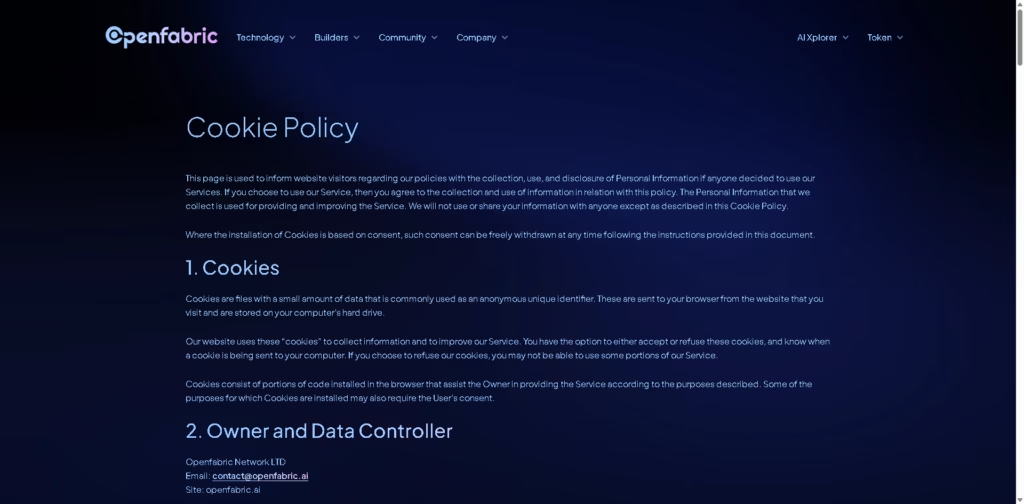
Openfabric AI is a blockchain-based AI ecosystem designed to power decentralized AI applications, data sharing, and agent-driven systems.
It focuses on turning raw data into usable AI resources while ensuring transparency, security, and user control over personal information and digital assets.
At its core, Openfabric AI combines AI infrastructure with Web3 principles, allowing developers and users to build, deploy, and interact with AI services in a decentralized environment.
Key Features
- Decentralized AI Ecosystem
Enables AI applications and services to run on a distributed network rather than centralized servers. - AI Infrastructure for Developers
Provides tools, APIs, and architecture support for building AI-powered applications. - Data Privacy & Cookie Controls
Includes transparent cookie policies and user consent options for data collection and usage. - Token-Based Ecosystem
Uses native tokens to support transactions, governance, and ecosystem incentives. - AI Xplorer Tools
Offers tools for exploring AI models, data, and ecosystem components. - Developer Documentation & SDKs
Provides technical resources for integrating AI services into applications. - Community & Builder Support
Encourages developers and builders to contribute to the ecosystem. - Security & Compliance Focus
Includes privacy policies, GDPR alignment, and data protection mechanisms.
Who Is Openfabric AI For?
- AI Developers
Ideal for building decentralized AI applications and services. - Web3 Builders
Suitable for blockchain-based AI and tokenized ecosystems. - Enterprises Exploring AI Infrastructure
Helps organizations experiment with distributed AI systems. - Data Scientists & Researchers
Useful for working with shared, structured AI datasets. - Startups Building AI Apps
Provides infrastructure and ecosystem tools for launching AI products. - Community Builders
Supports decentralized collaboration and AI innovation networks.
Final Thoughts
Openfabric AI is positioned as a Web3-native AI infrastructure platform that blends decentralized computing, token economics, and AI development tools.
Its goal is to give developers more control over data, models, and applications while promoting transparency and ownership in AI systems.
While the platform leans heavily toward blockchain and decentralized architecture, it offers a useful toolkit for developers building next-generation AI ecosystems.
For teams interested in combining AI with Web3 infrastructure, Openfabric AI presents a structured and evolving ecosystem worth exploring.