What It Does:
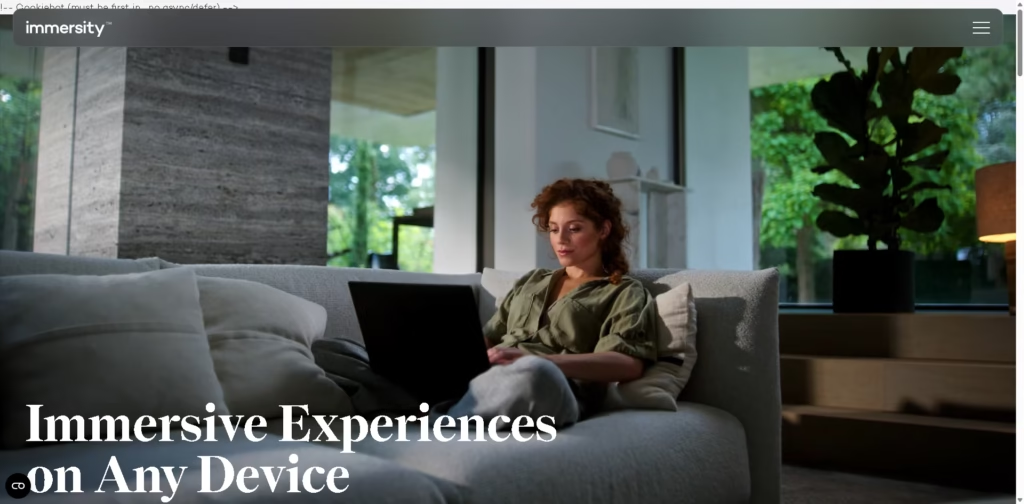
Immersity is a spatial computing platform that transforms regular screens into immersive, depth-rich experiences without requiring VR headsets.
Powered by spatial AI and switchable display technology, it allows users to experience movies, images, and digital content as if they’re inside the scene, directly from everyday devices like phones, tablets, and laptops.
Key Features:
- Glasses-Free Immersive Viewing – Experience holographic depth without wearing VR headsets.
- Spatial AI Software – Uses proprietary AI to understand depth and environment in real time.
- Switchable-Display Hardware – Hardware integration that enables devices to toggle immersive effects on demand.
- OEM Integration – Designed for manufacturers to embed into consumer devices.
- True Holographic Depth – Projects lifelike 3D effects that enhance realism.
- SDK & Platform Support – Tools available for integration across mobile and web applications.
- Ecosystem-Focused Value – Built for consumers, OEMs, and global tech platforms.
Who Is Immersity For?
- Consumers – Anyone who wants immersive content without investing in VR hardware.
- Device Manufacturers (OEMs) – Brands looking to differentiate devices with spatial display capabilities.
- Tech Platforms – Companies building next-gen AI systems powered by spatial intelligence.
- Developers – Teams integrating immersive capabilities into mobile or web apps.
- Media & Content Creators – Businesses aiming to deliver next-level visual engagement.
Final Thoughts:
Immersity isn’t just another display technology-it’s positioning itself as a bridge between traditional screens and spatial computing.
By combining AI-driven depth perception with switchable hardware, it removes the need for headsets while still delivering immersive experiences.
If you’re a device manufacturer or tech platform looking to step into the spatial AI era, Immersity offers a serious competitive advantage.