What It Does
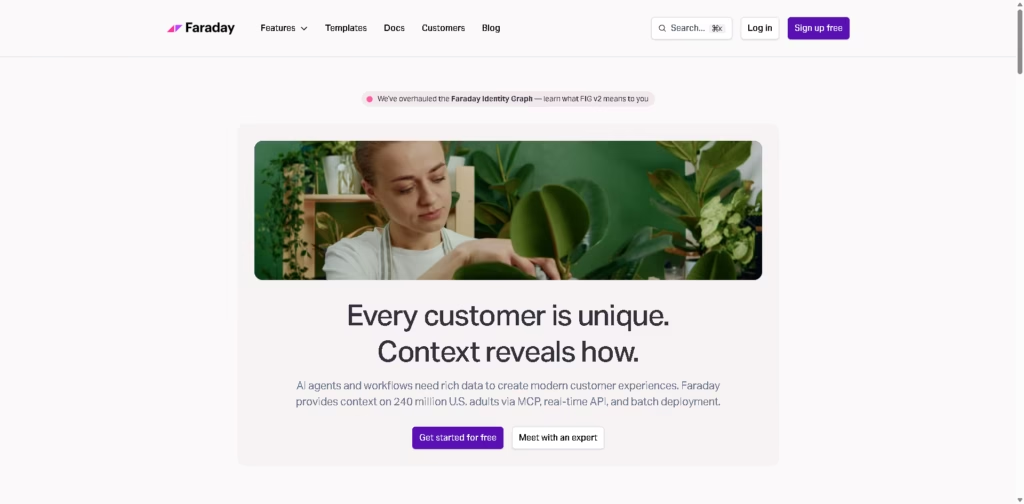
Faraday is a customer intelligence and predictive analytics platform that helps businesses understand, predict, and personalize customer behavior using large-scale consumer data and AI models.
In simple terms, it adds “smart context” to customer data so companies can predict who will convert, what they might buy next, and how to engage them more effectively.
Key Features
- Customer Identity Graph – Connects data on millions of U.S. consumers to build rich customer profiles.
- AI-Powered Predictions – Predicts outcomes like conversion likelihood, churn risk, and next best offer.
- On-Demand Customer Context – Adds 1,500+ behavioral and identity data points via API, batch, or MCP.
- Personalization at Scale – Helps brands tailor messages, offers, and experiences for each customer.
- Segmentation & Clustering – Groups customers into meaningful personas for better targeting.
- Real-Time Data Deployment – Pushes insights into CRMs, ad platforms, and marketing tools.
- Marketing Optimization Tools – Improves email targeting, ads, and customer journey decisions.
- Enterprise Integrations – Works with tools like Shopify, Salesforce, HubSpot, and more.
- High-Volume Prediction Engine – Generates billions of predictions daily for large-scale use cases.
Who Is Faraday For?
- E-commerce Brands – Personalizing offers, emails, and product recommendations.
- Marketing Teams – Improving campaign targeting and conversion rates.
- Data & Analytics Teams – Building predictive customer models.
- Enterprise Businesses – Managing large customer datasets at scale.
- Growth & RevOps Teams – Optimizing customer lifecycle value and retention.
Final Thoughts
Faraday is a powerful customer intelligence engine built for businesses that want to go beyond basic analytics and move into predictive, AI-driven decision-making.
Its biggest strength is turning raw customer data into actionable predictions and personalized experiences.
If your business relies heavily on customer data and personalization, it can significantly improve conversion and targeting. For smaller teams without large datasets, it may feel too advanced or infrastructure-heavy.