What It Does
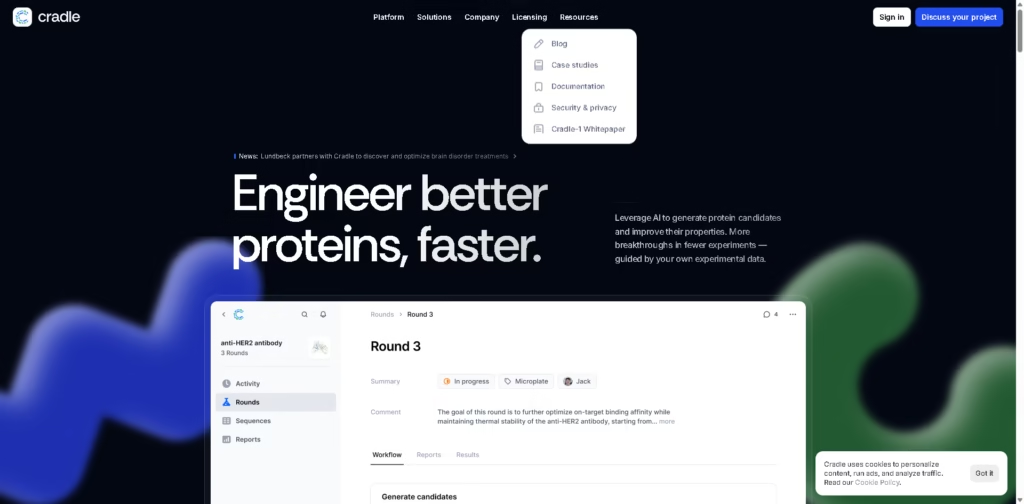
Cradle is an AI-powered protein engineering platform designed for biopharma and industrial biotechnology teams. It uses AI models and experimental data to generate protein candidates, optimize multiple properties, and help research teams reduce the number of experimental rounds needed to reach development goals.
Teams can bring their own protein sequences and experimental measurements into Cradle, generate candidate designs, track experimental rounds, and use new wet-lab results to improve subsequent model recommendations. The platform supports antibodies, enzymes, vaccines, and peptides across applications including therapeutics, agriculture, and food ingredients.
Quick Verdict
Best for: Biopharma and industrial biotech teams running data-driven protein engineering programs.
Skip if: You need a general-purpose AI platform unrelated to protein design or biological research.
Key Advantage: Uses experimental data to iteratively optimize multiple protein properties.
Top Alternative: Protein-design platforms offering AI-assisted sequence generation and optimization.
At a Glance
| Feature | Details |
|---|---|
| Category | AI Protein Engineering / Biotechnology |
| Pricing Model | Subscription / Custom |
| Free Tier | Not specified |
| Platform | Web |
| API | Not specified |
| Primary Strength | AI-guided protein optimization |
| Supported Modalities | Antibodies, Enzymes, Vaccines, Peptides |
| Enterprise Security | SOC 2, SSO, Private Data |
Key Features
- Generates protein candidates based on defined engineering objectives.
- Uses experimental data to improve models across subsequent rounds.
- Optimizes multiple protein properties simultaneously.
- Supports antibody, enzyme, vaccine, and peptide engineering.
- Provides tools for tracking rounds, data, and experimental results.
- Offers custom predictors for internally developed models.
Best For
- Biopharma teams developing therapeutic proteins.
- Industrial biotech teams optimizing enzymes and biological products.
- Researchers running iterative protein engineering experiments.
- Teams balancing activity, stability, binding, and expression objectives.
- Organizations managing proprietary protein sequences and experimental datasets.
Pros & Cons
Pros
- Supports iterative AI-guided protein engineering using experimental data.
- Can optimize multiple properties rather than focusing on one objective.
- Covers several major protein modalities and biological applications.
- Provides managed infrastructure with dedicated scientific and ML support.
- Includes enterprise-oriented privacy and security features.
Cons
- Pricing information is not provided in the supplied material.
- API availability is not specified.
- The platform is specialized for protein engineering and biological R&D.
- Some capabilities, such as custom predictors, are identified as beta.
Alternatives & Comparisons
| Alternative | Best For | Key Difference vs. Cradle |
|---|---|---|
| NVIDIA BioNeMo | Generative AI for drug discovery and biological research | Provides a broader ecosystem of foundation models and tools for drug discovery. |
| Benchling | Biological R&D data and workflow management | Focuses more broadly on R&D data, laboratory workflows, and collaboration. |
| Generate | AI-designed therapeutic proteins | Focuses on generative AI for designing novel therapeutic proteins. |
Cradle is focused on using AI and experimental feedback to optimize proteins across multiple properties and engineering objectives. It is most relevant to teams that already have measurable experimental workflows and want AI-assisted candidate generation and iterative optimization.
Frequently Asked Questions
What is Cradle?
Cradle is an AI-powered protein engineering platform for biopharma and industrial biotechnology teams. It helps generate and optimize protein candidates using AI and experimental data.
What types of proteins can Cradle work with?
The supplied information lists antibodies, enzymes, vaccines, and peptides. The company also states that proteins can be optimized based on measurable properties.
How does Cradle use experimental data?
Experimental results can be uploaded after each design round. Cradle’s models use these results to improve subsequent recommendations and guide further protein engineering rounds.
Which protein properties can Cradle optimize?
The platform mentions properties including activity, binding, stability, and expression. Multiple properties can be optimized simultaneously.
Is Cradle suitable for enterprise research teams?
The platform includes enterprise-oriented features such as SOC 2 compliance, SSO, private data handling, custom predictors, managed infrastructure, and dedicated support.
ToolsPedia Rating
Editorial assessment based on supplied product information, not hands-on testing.
- Performance & Speed: 4.5/5.0
- Ease of Setup: 4.0/5.0
- Feature Depth: 4.8/5.0
- Value for Price: 4.1/5.0
- ToolsPedia Score: 4.4/5.0
Final Thoughts
Cradle is a specialized AI platform for protein engineering that connects candidate generation with experimental feedback and multi-property optimization. Its support for several protein modalities, enterprise security controls, custom predictors, and managed infrastructure makes it suited to structured biological R&D programs.
Teams considering Cradle should assess whether their protein engineering workflow produces the experimental data needed for iterative model-guided optimization. A conversation with Cradle is also appropriate for organizations that need pricing, deployment details, or custom enterprise capabilities.