What It Does
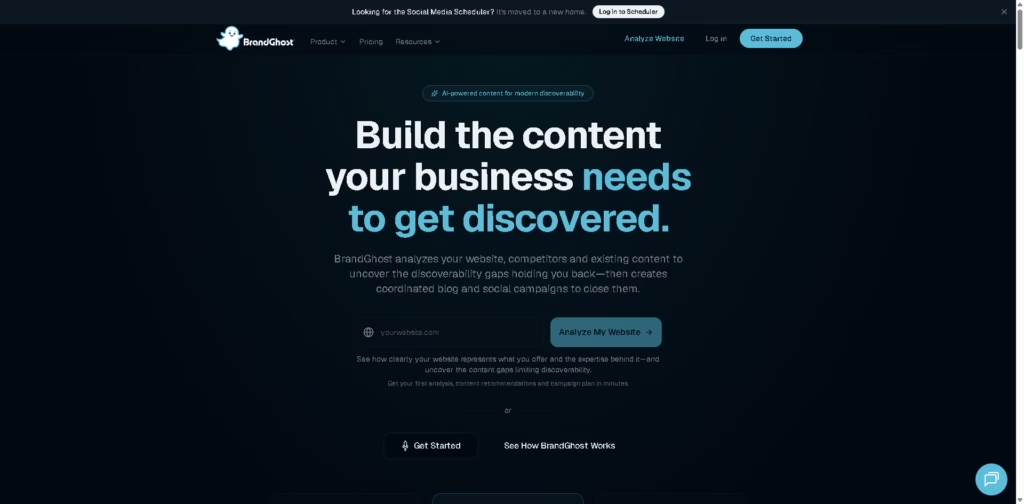
BrandGhost is an AI-powered content discoverability platform that analyzes a business website, products, competitors, and existing content to identify gaps in search visibility. It then turns those opportunities into SEO blog content and coordinated social campaigns.
BrandGhost is aimed at businesses, agencies, SaaS companies, e-commerce brands, local businesses, and solo operators that need both content planning and distribution. A typical workflow is: analyze a website, identify missing buyer topics, generate a connected blog cluster, create platform-specific social posts, review them, and schedule publication.
At a Glance
| Field | Details |
|---|---|
| Category | AI content strategy and discoverability |
| Primary Use | Content-gap analysis, SEO content, and social campaigns |
| Content Types | Blog articles, topic clusters, social posts |
| Social Platforms | LinkedIn, Instagram, Facebook, Threads, TikTok, X, YouTube, and others |
| Brand Management | Brand knowledge base, personas, voice, tone, messaging |
| Publishing | Social scheduling and automatic publishing |
| Website Audit | Product, content, representation, and discoverability analysis |
| Analytics | Google Search Console integration and representation scoring |
Key Features
- Identifies missing topics, buyer questions, and under-covered products.
- Generates SEO-focused blog clusters with internal linking.
- Creates platform-specific social content from broader campaigns.
- Maintains brand voice through a persistent knowledge base.
- Supports automated scheduling and publishing across social platforms.
- Provides representation scores across six discoverability signals.
- Connects Google Search Console for impressions and click tracking.
Best For
- Finding content gaps before investing in new articles.
- Turning one SEO opportunity into a coordinated content campaign.
- Creating social posts from long-form blog content.
- Maintaining a consistent brand voice across AI-generated content.
- Managing content production and publishing across multiple channels.
Pros & Cons
| Pros | Cons |
|---|---|
| Combines content-gap research, creation, and distribution in one workflow. | More specialized than a general-purpose AI writing tool. |
| Brand knowledge base can provide consistent context across generated content. | Search or AI citation visibility is not guaranteed by the platform. |
| Supports connected blog clusters instead of isolated articles. | The large number of publishing channels may be unnecessary for simpler workflows. |
| Website analysis helps determine what to create rather than starting from a blank prompt. | Content still requires human review for accuracy, positioning, and originality. |
| Supports a broad range of social publishing destinations. | Less suitable if you only need basic social scheduling or occasional AI writing. |
Alternatives & Comparisons
| Alternative | Best For | Key Difference |
|---|---|---|
| Semrush | Comprehensive SEO research and competitive analysis | Broader SEO toolkit, while BrandGhost emphasizes content creation and publishing. |
| Surfer SEO | Data-driven content optimization | More focused on optimizing individual SEO articles than full campaign distribution. |
| HubSpot | Integrated marketing, CRM, and content workflows | Much broader marketing platform with CRM and automation capabilities. |
| Buffer | Social scheduling and publishing | More focused on social management than website analysis and content-gap discovery. |
BrandGhost sits between an AI content platform and a social publishing system, with website discoverability as the starting point. Choose it when identifying content opportunities and turning them into multi-channel campaigns matters more than standalone SEO analysis or social scheduling.
Frequently Asked Questions
Is BrandGhost an AI writing tool or an SEO tool?
It combines both functions, but its workflow begins with website and content analysis rather than simply generating text from a prompt.
Can BrandGhost publish directly to social media?
Yes. The platform says connected accounts can be scheduled and published automatically across supported social platforms.
Does BrandGhost support multiple social networks?
Yes. The listed destinations include LinkedIn, Instagram, Facebook, Threads, TikTok, X, YouTube, Tumblr, Reddit, Medium, Discord, Pinterest, Telegram, and Bluesky.
Does BrandGhost guarantee better Google rankings or AI citations?
No. Its content and representation features are designed to support discoverability, but search rankings and AI citations depend on factors outside the platform’s control.
Can agencies use different brand voices for clients?
BrandGhost is designed for agencies and uses brand knowledge bases containing information such as voice, tone, personas, proof points, and competitive context.
Overall Rating
| Category | Score |
|---|---|
| Performance | 8.2/10 |
| Ease of Use | 8.4/10 |
| Feature Set | 9.0/10 |
| Workflow Fit | 9.1/10 |
| Overall | 8.7/10 |
BrandGhost earns a strong overall score because it connects content-gap discovery, AI content creation, brand context, and social distribution in a single workflow.
Final Verdict
- Best for: Businesses and agencies building SEO content and coordinated social campaigns.
- Avoid if you only need simple AI writing or basic social media scheduling.
- Biggest strength: Connects discoverability research directly to content creation and distribution.
- Best alternative: Semrush for deeper SEO research; Buffer for simpler social publishing.