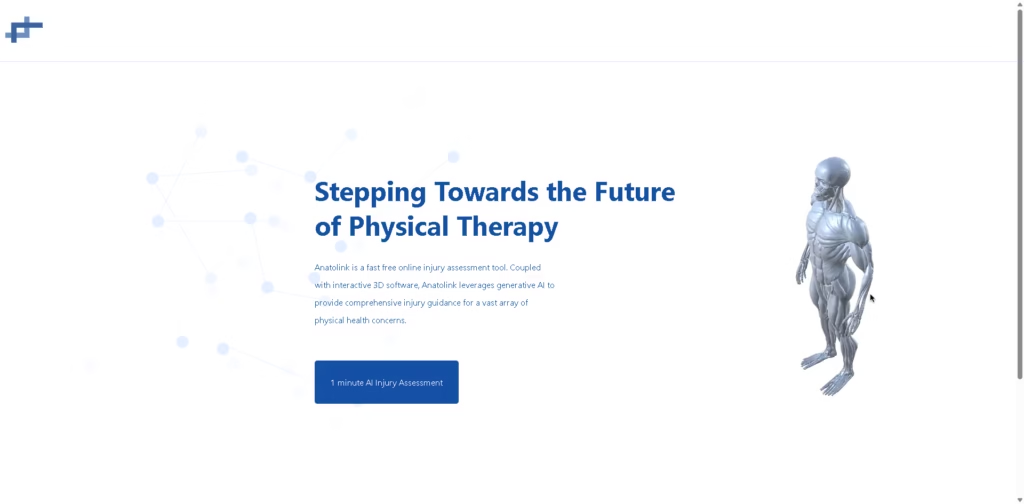
What It Does
Anatolink is a web-based AI injury assessment tool that helps users better understand potential physical injuries through a short guided assessment. It combines generative AI with interactive 3D anatomical visualizations to provide educational guidance for a wide range of musculoskeletal concerns.
The platform is intended to help users explore possible causes of pain or injury before seeking professional care. It focuses on injury education and physiotherapy insights rather than replacing a clinical diagnosis or treatment from a qualified healthcare provider.
Example workflow: A user experiencing shoulder pain completes the one-minute injury assessment, reviews AI-generated guidance alongside a 3D anatomical model, and uses the information to better understand their symptoms before consulting a physiotherapist.
At a Glance
| Field | Details |
|---|---|
| Category | AI Injury Assessment Tool |
| Primary Purpose | Educational injury assessment and physiotherapy guidance |
| Platform | Web-based |
| Assessment Time | Approximately 1 minute |
| AI Technology | Generative AI |
| Visualization | Interactive 3D anatomy |
| Target Users | Individuals seeking information about physical injuries |
| Cost | Free online assessment |
Key Features
- One-minute AI-guided injury assessment.
- Interactive 3D anatomical visualization.
- Educational physiotherapy guidance.
- Covers a broad range of physical health concerns.
- Browser-based access without software installation.
Best For
- Understanding possible musculoskeletal injuries.
- Learning basic physiotherapy concepts.
- Exploring body anatomy related to pain.
- Preparing questions before visiting a physiotherapist.
- Obtaining quick educational injury guidance.
Pros & Cons
| Pros | Cons |
|---|---|
| Free online injury assessment | Does not replace professional medical diagnosis |
| Interactive 3D anatomy visualization | Clinical validation details are not publicly provided |
| Fast assessment process | Limited information about assessment methodology |
| AI-generated educational guidance | No published integration with healthcare providers |
Alternatives & Comparisons
| Alternative | Best For | Key Difference |
|---|---|---|
| Hinge Health | Guided musculoskeletal care | Includes structured exercise and coaching programs |
| Kaia Health | Digital physical therapy | Focuses on rehabilitation exercises and ongoing treatment |
| Physitrack | Home exercise programs | Designed for clinician-prescribed rehabilitation |
| Symptomate | General symptom checking | Covers broader medical symptoms beyond musculoskeletal conditions |
Anatolink occupies a niche between symptom checkers and digital physiotherapy platforms by emphasizing AI-assisted injury education with interactive anatomy. It is a suitable option for users seeking a quick understanding of physical injuries before deciding on the next step in their care.
Frequently Asked Questions
Can Anatolink diagnose injuries?
No. Based on the available information, it provides AI-generated guidance and educational insights rather than a medical diagnosis.
How long does the injury assessment take?
The vendor states that the AI injury assessment can be completed in approximately one minute.
Is Anatolink free?
Yes. The website describes it as a free online injury assessment tool.
What types of injuries does Anatolink cover?
The platform states that it provides guidance for a wide range of physical health and musculoskeletal concerns.
Does Anatolink include 3D anatomy?
Yes. Interactive 3D anatomical visualization is one of its primary features.
Overall Rating
| Category | Rating |
|---|---|
| Performance | 4.3/5 |
| Ease of Use | 4.8/5 |
| Feature Set | 4.2/5 |
| Workflow Fit | 4.4/5 |
| Overall | 4.4/5 |
Anatolink offers an accessible and visually engaging way to explore potential musculoskeletal injuries, although it is best viewed as an educational tool rather than a substitute for professional medical evaluation.
Final Verdict
- Best for: Individuals seeking quick educational guidance about musculoskeletal injuries.
- Avoid if: You need a clinically confirmed diagnosis or personalized treatment plan.
- Biggest strength: Combines AI guidance with interactive 3D anatomy in a fast assessment.
- Best alternative: Kaia Health for users looking for structured digital physical therapy programs.